
Climate change and irrigation: how to prepare agriculture for a scenario of greater water variability
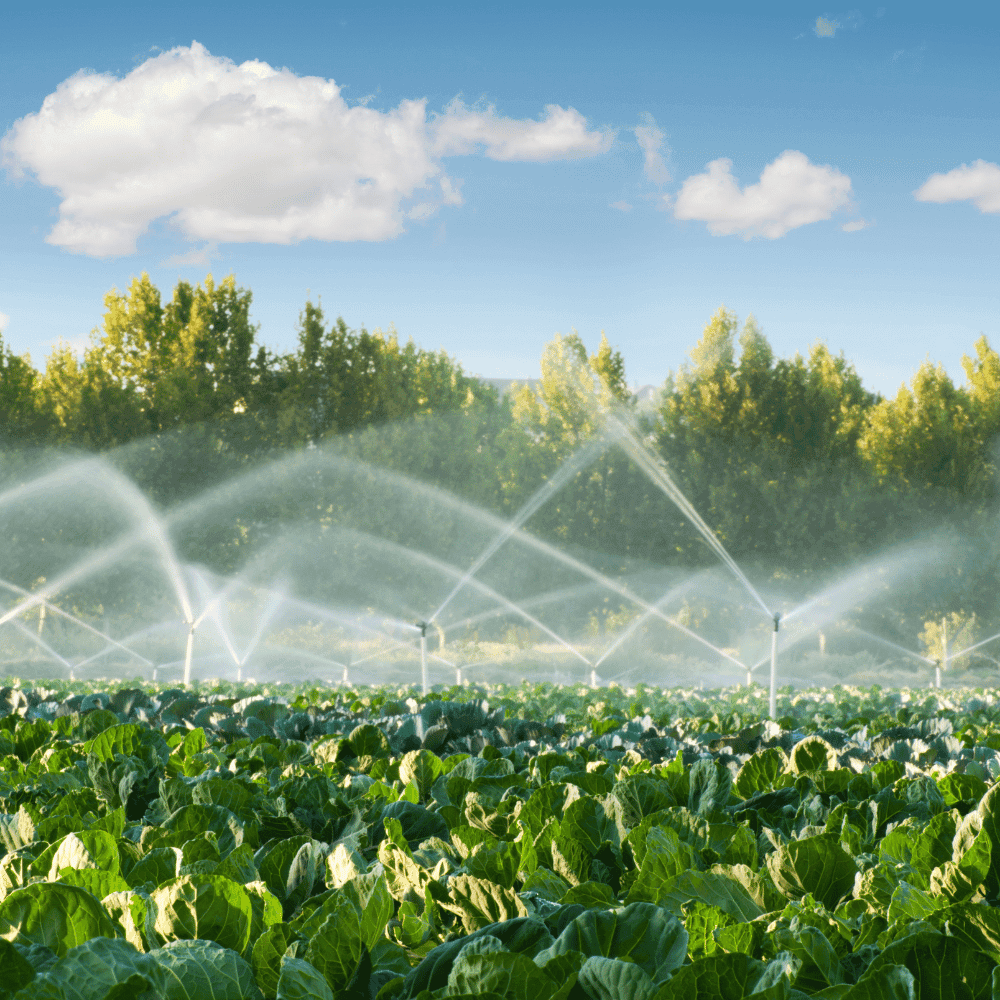
Brazilian agriculture is facing a challenge that is likely to become increasingly important in the coming years: producing with greater security in the face of an increasingly variable climate. Changes in rainfall patterns, longer periods of drought, and climate phenomena such as El Niño may increase the need for management strategies capable of reducing the impacts of water irregularity.
Researchers have already pointed out that the issue is not only the amount of rainfall, but mainly its distribution throughout the production cycle. In the Cerrado region, for example, studies cited by Embrapa identified an increase in the duration of drought periods and a reduction in the number of rainy days.
This scenario becomes even more relevant considering the potential expansion of irrigated agriculture in the country. According to Durval Dourado Neto, professor at the Luiz de Queiroz College of Agriculture (Esalq), Brazil currently has around 9 million irrigated hectares but has the potential to reach 55 million hectares.
In this context, investing in irrigation is no longer merely an alternative for increasing productivity and becomes part of a strategy for adaptation and agricultural production security.
Irrigation as a prevention strategy
Irrigation makes it possible to reduce dependence on rainfall distribution and provides greater predictability for crop development. According to Embrapa researchers, one of the main benefits of irrigated agriculture is precisely production stability, allowing farmers greater planning capacity.
This does not mean using water indiscriminately. On the contrary: in light of climate challenges, irrigation systems will increasingly need to become more efficient, using water precisely and according to the needs of each crop.
Drip irrigation and micro-sprinkler irrigation are among the technologies that make it possible to apply water directly or locally to cultivated areas, supporting irrigation control in different crops, such as coffee, fruit, vegetables, and other agricultural productions.
Filtration as part of irrigation efficiency
In localized irrigation systems, water quality must also be considered as part of the planning process. Suspended solids and other materials present in the water can compromise the operation of hydraulic components and emitters, affecting application uniformity.
Therefore, water filtration for irrigation plays an important role in protecting and ensuring the performance of irrigation systems.
Hidro Solo develops solutions for this stage, such as Sand Filters and Sand Filtration Systems, designed for drip and micro-sprinkler irrigation systems. Sand Filters and Sand Filtration Systems Sand filters act as a first barrier against suspended solids and are designed to contribute to the efficiency and durability of the system.
Hidro Solo Disc Filters can also act preventively within the network, including upstream or downstream of sand filters, helping retain suspended solids and protect hydraulic equipment.
Automation and efficiency: making the most of every irrigation cycle
The evolution of irrigation systems also involves automation. Filter backwashing, for example, can be scheduled by time or activated based on a previously established pressure differential.
Hidro Solo’s backwash automation system uses the Pluvitron® Control Panel to activate the process when the defined parameters are reached, helping maintain filtration performance without relying exclusively on manual intervention.
This combination of localized irrigation, efficient filtration, and automation represents a way to prepare agricultural production for a scenario in which water will increasingly need to be managed with precision.
Better prepared for a changing climate
Climate change does not mean that all regions will face the same impacts or that irrigation will be necessary in the same way for all crops. What is becoming increasingly evident is the need for planning, technical knowledge, and adequate infrastructure to deal with greater climate variability.
Brazilian agriculture has enormous potential to advance along this path. And irrigation, when planned according to water availability, crop characteristics, and local conditions, can contribute to greater production stability and better use of resources.
For 45 years, Hidro Solo has been part of this evolution by developing filtration solutions for irrigation systems and helping producers use water more efficiently and safely.
In a changing scenario, preparing irrigation also means preparing agricultural production for the future.
Source: Globo Rural (adapted text)